On the whole, Lady Chatterley's Lover is a relatively faithful adaptation. However, there are a number of important changes that impact the story.

Warning: Contains SPOILERS for Lady Chatterley's LoverNetflix's Lady Chatterley's Lover is one of several adaptations of D.H. Lawrence's seminal 1928 novel and features several prominent differences from the original book. Broadly, the 2022 Netflix movie is a relatively faithful retelling of the source novel, and doesn't feature too many significant changes. These subtle deviations and focus on coherent and effective storytelling go some way towards explaining its generally positive reception (with Lady Chatterley's Lover holding an 85% rating on Rotten Tomatoes at the time of writing). However, as with any adaptation, there are some key alterations, some of which have serious implications for the story and its wider themes.
Focusing on the love story between Lady Constance "Connie" Chatterley (Emma Corrin) and gamekeeper Oliver Mellors (Jack O'Connell), Lawrence's work caused a scandal upon its release – as much for its depiction of an inter-class affair as for its more explicitly sexual content. In this regard, some of what made the original novel so controversial has inevitably become diluted as societal norms have changed. Nevertheless, Lady Chatterley's Lover remains a compelling romance, both in literature and on the big screen. In order to remain relevant to a modern audience, Laure de Clermont-Tonnerre's female-centric version makes several subtle and some major changes to the story's themes and wider plot. As such, despite its comparative accuracy, there are enough points of difference to reveal something new for even the most die-hard Lawrence aficionados. Here are the biggest changes that Netflix's Lady Chatterley's Lover makes to the book.
The Netflix Movie Changes Connie's Role
In a subtle but important tweak to the novel's gender roles, the 2022 Netflix movie adaptation gives Connie far greater agency – especially when it comes to its depictions of her affair with Mellors. While the original was still revolutionary in its representation of female desire and sexuality, using them as a vessel through which to explore wider ideas of liberation and freedom, the Netflix film is much more explicit in establishing its Connie as an independent sexual being. Not only does she regularly take the lead in her liaisons with Oliver, but the movie also adjusts several other important moments pertaining to her sexual awakening – including a moment where she masturbates after witnessing Mellors washing himself, rather than crying herself to sleep as she does in the book. Although these differences are relatively minor, they nonetheless change key aspects of Connie's character, updating her and making her more relatable for a Netflix audience in 2022.
Connie Has More Than One Affair
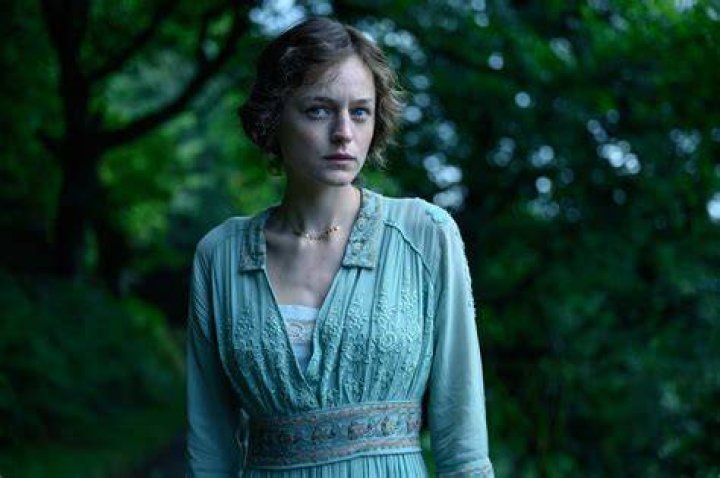
An interesting change that arguably highlights the significance of Mellors' and Connie's relationship is the removal of an earlier affair in Netflix's Lady Chatterley's Lover. In the book, Connie kicks off her journey with an experimental tryst with Michaelis – a playwright visiting her and her husband's Derbyshire abode. The affair does not prove particularly satisfying, further fuelling Connie's desire for a more deep-rooted physical connection. This subplot, however, is all but absent from the Netflix adaptation, save for a brief flirtation and brush of physical contact at a party. While Connie's husband, Clifford Chatterley, still bans him from the house, the existence of an actual affair is only implied. The fact that Michaelis' role is so reduced places the focus solely on Mellors as an object of illicit desire.
Connie's Pregnancy Is Different
To this end, the absence of the Michaelis affair also changes a key facet of Lady Chatterley's Lover's ending, concerning Connie's climactic pregnancy. In the book, Connie tries to convince Clifford that her affair was with someone of similar social standing – a situation which, in his eyes, would be far preferable to the alternative of being cuckolded by someone from the working class – much less his employee. In fact, Connie pursuing an affair with somebody of an appropriate rank is even considered as an option in the original novel after Clifford's post-World War I paralysis. However, in Netflix's Lady Chatterley's Lover, Connie is quite clear about the origins of her pregnancy – making her much more forthcoming, but arguably diluting one of the source material's key concerns around class and snobbery.
Netflix's Movie Changes Mellors' Background

A further way in which Netflix's Lady Chatterley's Lover changes the novel's focus on class is in its depiction of Mellors. As in the book, Jack O'Connell's take on the character is largely deferential to Connie, constantly referring to her as "m'lady" even after they have started their affair. This underscores both the novel's and the movie's wider concerns with class and social hierarchy. However, one significant difference is in Mellors' use of language. The 2022 Netflix movie has Mellors speak in English almost exclusively, albeit in a strong Derbyshire accent. The original D.H. Lawrence novel, however, has the gamekeeper slip seamlessly in and out of English and the local Derbyshire dialect – a creative decision that both highlights the class divide between the two characters and roots Mellors to the local landscape. In removing this aspect of his character, the Lady Chatterley's Lover Netflix movie version arguably changes a key aspect of the source material and makes some of its most central themes somewhat less visible than they otherwise could have been.
Lady Chatterley's Lover Changes The Ending

For all the subtle changes to the novel's themes and wider social commentary, the biggest differences between Netflix's Lady Chatterley's Lover and the book are in the ending. In the original, Connie and Mellors' fate is left somewhat open-ended. Although Mellors is fired and Connie remains with her sister, the final few pages are devoted to a letter from Mellors in which he professes his feelings and leaves open the possibility of a future reunion. However, despite this sense of hope, the two characters remain unequivocally apart, lending a sense of tragedy to the finale.
By contrast, Netflix's 2022 movie takes a very different approach. In the Lady Chatterley's Lover ending, Connie takes her sister's car to travel to the Scottish farm to meet Mellors, formally reuniting the two characters and explicitly setting up a hopeful future for the pair. This not only makes for a happier ending than the original novel, but also removes the characters from the judgmental setting in which they were forced to conduct their affair, returning them to the relative rural bliss that they found in Mellors' cabin. On the whole, Lady Chatterley's Lover is a largely faithful retelling of Lawrence's original story. However, in making a number of carefully considered book changes, the 2022 adaptation contains enough points of difference to make it an interesting and broadly successful addition to the novel's storied history.
Next: Video Game Movies & Shows Coming To Netflix In 2022 (& Beyond)