The Last Voyage of the Demeter ends where it begins, but leaves viewers wanting more. We break down the horror film's ending, what's next & more.

Warning: This post contains spoilers for The Last Voyage of the Demeter
Summary
- The Last Voyage of the Demeter ends with the entire crew killed, except for Clemens. Clemens witnesses Anna's death and vows to pursue Dracula for revenge.
- Carfax Abbey is revealed to be Dracula's estate in London, where he rests during the daytime before hunting at night.
- Dracula and Anna are buried in Transylvanian soil, which is essential for restoring Dracula's strength during the day. The dragon symbol on the crates symbolizes Dracula's connection to Vlad the Impaler.
The Last Voyage of the Demeter ends with the entire crew of the Demeter — save for Clemens — killed. The supernatural horror film ends where it began: At the port of Whitby, with the ship having crashed into the harbor and the captain’s log having been found. Clemens, meanwhile, drifts at sea, having just witnessed the death of Anna, who reveals she was turned by Dracula. Though Clemens’ blood transfusions staved off the infection for a while, Anna didn’t want to live the life of a vampire.
Knowing she now had a choice in the matter, whereas she didn’t when she was offered to Dracula by her people, Anna chose to be burned by the sun than live the life of the undead. After her death, Clemens (Corey Hawkins) makes it ashore. Instead of going on with his life, the doctor vows to pursue Dracula and kill him for the death he’s caused. Clemens starts with the mystery of Carfax Abbey. Now that he knows Dracula can be burned by the sun, Clemens intends to kill him while he rests. But Clemens belatedly realizes his neck injury makes it so Dracula can sense him and vice versa.
Who Is Behind The Mysterious Carfax Abbey?
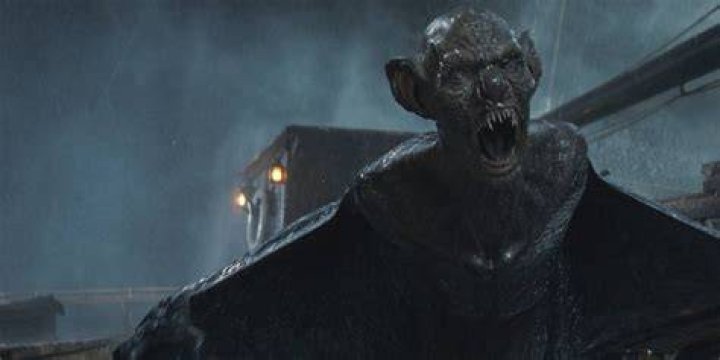
Throughout the film, the mystery surrounding Carfax Abbey deepens. It is what signed off on the transport of Count Dracula and his cargo, but there doesn’t seem to be any other information about it. Clemens looks it up when he arrives in England, and it seems to be a location where Dracula is holed up. What The Last Voyage of the Demeter doesn’t explain is that Carfax Abbey is actually an estate Dracula bought in London, and it’s where he lays to rest in the daytime before stalking the city for victims at night.
Considering Dracula had meticulously prepared for his trip, it’s likely that he’d bought Carfax Abbey long before the Demeter was set to sail. Dracula is intelligent, and didn’t want anyone to ask questions. In Bram Stoker’s Dracula, the estate is simply referred to by the first part of its name. Carfax Abbey is also a fictitious place, though it is based on the real-life Whitby Abbey in England. Whitby is also the name of the port at which the Demeter arrives.
Captain Elliot’s Last Words Explained

Captain Elliot is forever changed following the death of his grandson Toby, but he agrees that the Demeter must go down in the hopes of killing Dracula once and for all. Just before his death, Captain Elliot tells Clemens, “Let them know I was true to my trust.” While it seemed as though Elliot was speaking in general, perhaps about his honor as a captain, it’s more than likely he wanted others to know that he was right all along about Clemens. Throughout the voyage, Captain Elliot was one of the only people to believe in Clemens, trusting him with the life of Toby and Anna.
Clemens had long been dismissed because he was a Black man, discredited and not given opportunities despite his credentials. Captain Elliot believed Clemens was not only a good man, but good at his job. Elliot’s last words signified he was right to trust Clemens. What’s more, Elliot believed Wojchek would have made a good captain, and the fact that the latter agreed to go down with the ship and ultimately trusted Clemens with the plan — despite Wojchek’s earlier antagonism towards Clemens — solidified Captain Elliot’s decisions to rely on both characters. Elliot’s last words held weight for Clemens, even if he turned toward revenge.
The Real Reason Dracula & Anna Are Buried In Soil

The entirety of Count Dracula’s cargo was made up of crates of soil. Dracula and Anna were buried in them, so deeply that no one realized at first that there was anyone inside. Initially, the soil seemed like an odd choice. It covered up Dracula well enough, but he was bringing it along to London because the soil itself was from Transylvania — Dracula’s homeland. The Transylvanian soil is needed for Dracula to restore his strength during the day while he sleeps.
This is especially pertinent because Dracula was leaving Transylvania behind for London, and the soil was a requirement as he made his home in a new place. Without being surrounded or buried in Transylvanian soil, Dracula would not be as powerful as he aimed to be. Of course, the Demeter’s crew didn’t know the soil was so important, only that it was an odd thing to be buried in. Perhaps if Anna had an inkling regarding why he needed to be buried in it, the crew could have come up with a plan to rid Dracula of his beloved soil, sapping him of his energy.
The Meaning Of Dracula’s Dragon Symbol

Dracula’s coffin — and the other crates making up the Demeter’s cargo — was decorated with the dragon symbol. The reason behind the symbol isn’t explained in The Last Voyage of the Demeter, but the dragon is synonymous with Dracula himself, whose name means “son of the dragon.” Bram Stoker is said to have been influenced by Vlad III Dracul, also known as Vlad the Impaler.
Vlad III was the son of Vlad II, who was a member of the Order of the Dragon beginning in 1431, and whose emblem was a symbol of the dragon. In modern Romanian, the name Dracul refers to the devil. In the film, Anna often calls Dracula the devil because of his actions, the hold he has on people, and the death he brings wherever he goes. Thus, Dracula and the devil become one and the same, born from the dragon and transformed over time, an ancient entity whose symbol brings terror.
What The Last Voyage Of The Demeter Changes From The Book

“The Captain’s Log” chapter in Stoker’s Dracula lays the groundwork for The Last Voyage of the Demeter, but the film’s screenwriters alter or add a few things to expand upon the existing story. In the book, the Demeter sets sail in the summer of 1893, whereas the voyage in the film takes place in 1897. The sea captain is found lashed to the wheel of the ship in the book, but he is freed by Clemens before he dies in the movie. The names of the crew, and the details of exactly what happened daily on the ship, are additions to the film, as are Clemens and Toby.
How The Last Voyage Of The Demeter’s Ending Sets Up A Sequel
The Last Voyage of the Demeter ends with the entirety of the ship’s crew dead, but Clemens manages to survive. Dracula has made his way to London and is fully aware of Clemens’ presence. It’s Clemens’ vow to find and kill Dracula that essentially sets up a sequel to the horror film. The moment in the pub is charged with revenge, surprise, and a challenge from Dracula, as though daring Clemens to kill him.
While the Demeter’s story is over, the film’s final scene seems to be hinting towards more to come. Clemens’ hunt for Dracula has only just begun when the film ends, and a sequel could follow Clemens in this next chapter. That said, a sequel to The Last Voyage of the Demeter has not yet been confirmed, and it’s unclear whether there will be one. Even if a sequel never materializes, one can imagine that Clemens will struggle in killing Dracula, a formidable foe, but there is always hope he might succeed.