Charlie Kaufman's directorial debut draws the curtain with a mind-bendingly tragic finale.

From the beginning to the ending, Charlie Kaufman’s directorial debut Synecdoche, New York is intensely cerebral. The film’s attempt at blurring the lines between reality and fiction provides it's leading man, Philip Seymour-Hoffman, to deliver his dramatic prowess while allowing writer-director Kaufman to play around with his familiar brand of existentialist tragedy. To put it simply, the highly-polarizing 2008 film deals with a playwright named Caden who is struggling with his creative projects, personal relationships, and both his physical and mental health. Eager to create an ambitious magnum opus, he goes on to house his actors in a life-sized replica of New York City, a theatre experiment with life-altering consequences.
As amusing and baffling it is throughout its entire narrative, Synecdoche, New York’s open-ended finale makes Kaufman’s film truly stand out in modern surrealist cinema. Much like previous Charlie Kaufman films like Eternal Sunshine of the Spotless Mind, Adaptation, and Being John Malkovich, Synecdoche, New York’s conclusion offers a lot of philosophical and artistic discourse to unpack. While the ending can understandably agitate a few viewers with its cynical undertones and multiple interpretations, others might just be in awe of how Kaufman ends up tying the beginning to the end making the entire film’s events significant and futile at the same time.
Does Caden Ever Get To Finish The Play?
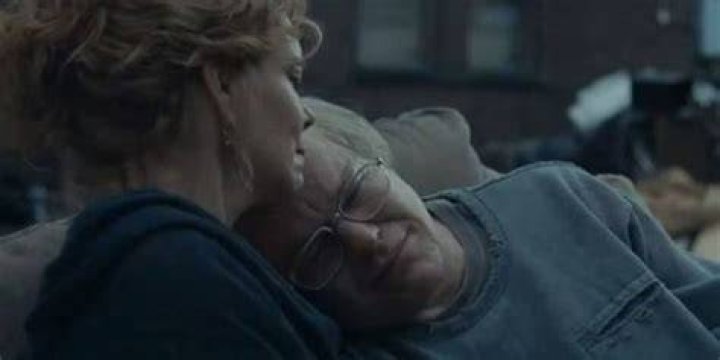
For a good deal of the film’s duration, Caden makes the play’s creation his very purpose of living. No matter if he goes through multiple divorces or struggles with the guilt of not raising his daughter, Caden sticks to making his actors “act out their real lives” in the ambitious faux-New York that he has come up with. But with the play consuming him entirely to the point of seeping into his real life, Philip Seymour Hoffman's character undergoes moments of confusion like the viewers. In the end, as the aged Caden gives up being the play’s director, he leads a life of servitude until he dies.
While the final line of Synecdoche, New York is haunting, it is Caden’s monologue before this order that sheds light on how passionate he still was with the play. As he hopelessly narrates his life’s regrets to an actress, he still seems to have not given hope as he says, “I know what to do with this play now. I have an idea.” While the play still remains unfinished, it would have had the perfect ending only if Caden didn’t get the director’s order to die. Caden’s final desire encapsulates his toxic obsession with his creative goals.
What Happens To The Other Actors?

The movie focuses on the making of a stage play (even though the play seems to be perpetually unfinished). As Caden ages up to his 80s, the play seems to have turned into a human experiment instead. All this time, it is to be understood that the cast members are also aging with time and putting their real-life changes in improvised routines. Most of the cast are obedient to their longtime director, even as some resistance inevitably brews. With the actors demanding to know when they would actually get to perform the play, feelings of unrest and anarchy start arising to the point when the life-sized set falls into ruin.
The final fate of the other actors and the play’s sets are left open to interpretation. As Caden walks alone in abandoned streets, it feels like the world around him has changed (similar to those that can be found in a dystopian movies). But whether this world is the real one or one of his own making, no straight answers are offered. Regardless of where Caden is, it is clear that the actors couldn’t share the same patience anymore, choosing to leave the fictional world they were inhabiting for so long. It almost feels like Caden assembled the actors to escape from his own loneliness, ironically only to be left alone again.
Why Does Caden Stop Being The Director?
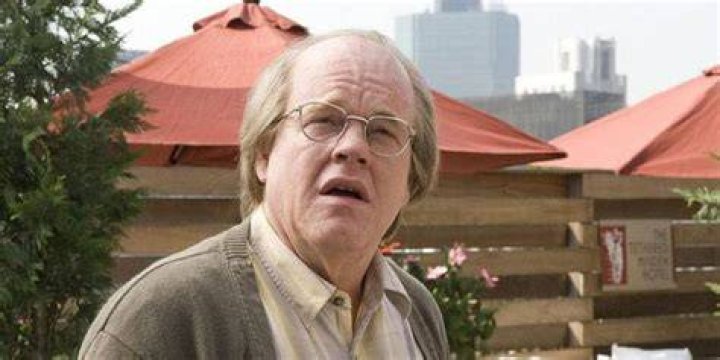
With his personal and professional distress crossing limits, Caden gives up his role as director and lets an actress named Millicent take over for him. Instead, he himself becomes an actor, taking Millicent’s previous role of Ellen. Again, the complex Charlie Kaufman movie offers no straight answers behind this sudden change and viewers can interpret it as Caden simply reaching his breaking point. But even in his new role, he still harbors creative thoughts to take the play forward as is evident from his closing dialogues. Alas, by then, it is too late for him to take up the role of director again.
How The Play Changed Caden’s Life In The End?
Synecdoche, New York can be interpreted as a commentary on the life of a tormented artist and how excessive self-indulgence can yield self-destructive results. All through the film, Caden is worried of the physical decay that his body seems to undergo. It only serves as twisted irony that Caden still manages to outlive his loved ones in the end. But even being alive proves to be a Herculean task with his artistic obsession consuming him entirely, driving him to a rather bleak existence. As a movie about tortured geniuses, Synecdoche New York explores this obsession even with Sammy's character who even goes to the extent of killing himself.
The Real Meaning Of Synecdoche New York’s Ending
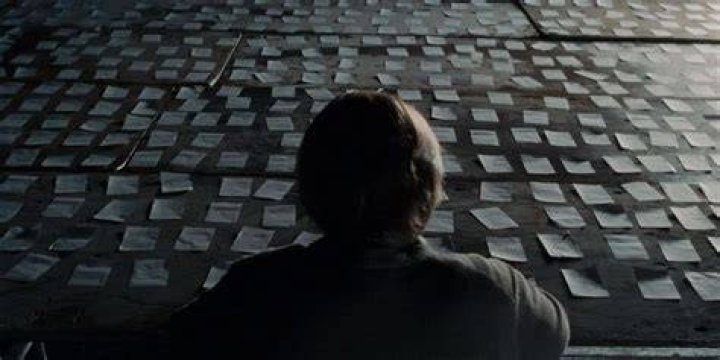
It was William Shakespeare who wrote in his play As You Like It, “All the world’s a stage, and all the men and women merely players”. Synecdoche, New York seems to carry forward this metaphor with Caden’s play turning into his whole world. Even for the actors who are supposed to play fictionalized versions of themselves, switching between reality and art becomes difficult, revealing how similar both worlds can be. Similarly, philosophical literature also appears in Synecdoche, New York such as Marcel Proust’s Swann’s Way and Franz Kafka’s The Trial. Both works deal with common themes like involuntary memory, loss of identity and the protagonist’s world slowly crumbling.
Such direct references behind its heavy themes make the ending of Charlie Kaufman's Synecdoche, New York all the more memorable. Despite all the surreal events that have transpired in the film so far, the story seems to meet a futile end as its protagonist withers away from existence. The constant utterance of the line "The end is built into the beginning" goes on to make complete sense as the credits roll. Whatever happens in between birth (the beginning) and death (the end) seems to add some purpose to living life and for Caden, this purpose tragically revolved around his play more than anything else.
MORE: I'm Thinking Of Ending Things: How The Movie Compares To The Book