Squid Game centers around a series of innocent childhood games turned dark. Here's the origin of each game in order, and their deeper meanings.

Summary
- The Squid Game games are dark spins on classic children's pastimes, with deeper meanings than meets the eye. Season 1 ends with the titular game, but there are more deadly games in between.
- The Squid Game games, like Red Light Green Light, Dalgona, Tug of War, Marbles, and Glass Tile, use nostalgia and childhood innocence to create a stark contrast with the grim reality of the competition.
- Season 2 will likely introduce new deadly twists on well-known children's games, continuing the theme of gladiatorial entertainment for the wealthy VIPs. Expect a mix of familiar and original games.
All the Squid Game games are dark and twisted spins on a number of classic children’s pastimes, both Korean and international, and each one has a deeper layer of meaning than appears at first glance. Squid Game season 1 ends with the titular Squid Game, which is explained in the show’s opening scene, but there are many other innocent-turned-deadly games that fill the episodes in between. Notably, Gi-hun survived all the Squid Game games in order to win a huge sum of cash. With Squid Game season 2 being greenlit by Netflix, it would be interesting to see what new deadly twists on well-known children's games will provide gladiatorial entertainment for the VIPs.
There's a reason the Squid Game games became such a talking point, and will likely be so again when Squid Game season 2 arrives. In Squid Game season 1, a big part of the terror conveyed to the audience is the dissonance between how the games look and feel and what they actually are. Like the bright red and green colors of the show's costumes, every Squid Game game conjures feelings of happiness and childhood, which are quickly smashed by the grim reality of what the contestants must do.
Recruiter’s Game: Ddakji

Ddakji is the first of all the Squid Games games in order. Before SquidGame's gameshow begins, players are first tested by the organization’s recruiters, people who seek out those deeply in debt and prey on their desperation through the promise of reward for playing a simple game. In the show, the recruitment game Gi-hun plays is ddakji, also called ttakji. The Squid Game game's origins come from a traditional Korean game similar in many ways to the popular 1990s game known as Pogs. The goal is simply to flip your opponent's tile on the ground by striking it with your own tile, made of folded paper.
In the example shown of Gi-hun playing with the Squid Game recruiter, it’s clear that he’s at a disadvantage because the recruiter carries his own set of game pieces around. He is obviously more skilled and prepared, but he acts like he and Gi-hun are on an even playing field. Ddakji is arguably the most unfair of all the Squid Game games. In many ways, this dynamic mirrors the capitalist corruption that Squid Game critiques. Indeed, at its very core, Squid Game is really about a society in which the poor have no real way to rise to an equal station as the rich, but where an illusion of equality is perpetuated nonetheless.

Squid Game Cast & Character Guide
Netflix’s Squid Game is about people playing life or death children’s games. Who are the characters and where else do the cast members appear?Round 1: Red Light, Green Light

Once Gi-hun and the other Squid Game contestants make it to the island, they start the games off with perhaps the most brutal one of all: Red Light, Green Light. This Squid Game game's origins come from a beloved playground game. Red Light, Green Light is known by many names, including Statues, Grandmother’s Footsteps, and, in Korea, “Mugunghwa kkochi pieotseumnida.” The Korean name is also the song sung by the creepy killer doll in Squid Game, which roughly translates to “The Mugunghwa flower has bloomed.”
Symbolically, Red Light, Green Light makes a lot of sense as the first of the Squid Games as it shows the contestants in a truly traumatic fashion that if they step out of line even a little bit, they will die. It reinforces the theme of control that pervades the game, and it’s a sickeningly perfect game to whittle down the playing field as more than half of the Squid Game players are killed before the first round ends. Red Light, Green Light may also be the most memorable and influential out of all the Squid Game games.
Round 2: Dalgona/Ppopgi
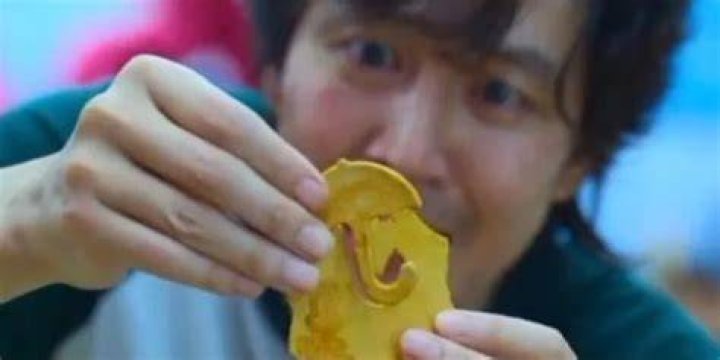
The second of the SquidGame games in order sees the contestants play in a competition involving ppopgi, also called dalgona. Squid Game's honeycomb toffee candy was once a popular Korean street food. The Squid Game's origins come from a deal involving the ppopgi. Traditionally, if the person buying the dalgona managed to eat around the shape in the middle without breaking it, they would receive a second, free candy.
That’s the challenge given to the players in Squid Game, but the reward for successful eating is survival, and the punishment for failure is death. The terrifying delicacy and fragility of the game are well reflective of the Squid Game players’ state of mind at the time, after seeing so many be killed during Red Light, Green Light. They, like the candy, hang delicately in the balance, with even the slightest mistake meaning their destruction.
Round 3: Tug Of War

In round 3, the competition becomes team-based in Squid Games' tug of war. This Squid Game game's origins hold deep cultural significance in Korea, where variations of tug of war have been played in festivals and community celebrations for many years, especially in agricultural areas. Called juldarigi in Korea, tug-of-war type games are often played between the east and west sides of villages, with the winners supposedly earning a superior harvest that season.
The winners of this Squid Game obviously earn a different sort of good fortune. Thematically, the tug-of-war round begins a turn in Squid Game, making the competition directly between the players, rather than between the players and the organization. That shift sets up the factionalism and backstabbing that pervade the later episodes of the show. Indeed, after each of the Squid Game games, the players' very morals and internal emotions are in an increasingly unpredictable tug of war.
Round 4: Marbles

Round 4 is Marbles, which different players choose to play in different ways. Contestants match up in pairs, like Gi-hun and the old man Oh Il-nam, and one must win all the other player’s marbles before the time given expires. The contestant without any marbles at the end of the game dies. This Squid Game's origins are some of the most ancient and longstanding in known history, dating back thousands of years to ancient civilizations like the Roman Empire. As shown in Squid Game episode 6, marbles can be played in a wide variety of different ways.
In the show, this Squid Game is primarily used as an opportunity to slow down the frantic pace of the action and give character relationships a chance to really develop in a high-pressure situation. It also forces the remaining players to take part in the violence of the games by effectively choosing for themselves which Squid Game contestants will die and which ones will live — but in a twisted way. Indeed, this was also the most deceptive of the Squid Game games, as players initially thought they would be paired with — and not against — their chosen partners. Moreover, the classic urban neighborhood setting uses nostalgia to further terrorize both players' and audiences' minds.
Marbles is the game that creates the most heartbreaking - and many of the biggest - character deaths in Squid Game. Abdul Ali and Sang-woo pair up for this game, for example. While Abdul Ali is a fan-favorite character who spends much of his time in the games helping other players and making sure others survive, Sang-woo proves himself to be the complete opposite. He begs for Abdul Ali to help him, and then completely turns on him during Marbles, causing the death of someone who considers him a friend. Likewise, when the players are told to pick partners, many of them choose someone they trust, and the game subverts their expectations. A husband and wife are forced to compete against one another in the Marbles round, with one of them losing their life to the game, and the other taking their own life afterward.
Squid Game: Every Clue To The Old Man Twist
Squid Game’s ending reveals that Oh Il-nam, the oldest player in the games, is actually the founder. What are the clues that alluded to this fact?Round 5: The Glass Tile Game

The only game of Squid Game season 1 that doesn't explicitly have real-world origins is round 5, which sees the contestants making their way across a treacherous path of unpredictably safe and unsafe glass platforms. Still, this Squid Game is inspired by hopscotch and other similar hopping games, and its origins date back centuries to ancient India and Rome. In the show, the game is used to represent how severely the competition is rigged against the players, as the Squid Game Front Man quickly turns out the lights when he sees one contestant who can tell the difference between tempered and untempered glass.
Unlike all the other Squid Game games which occur in nostalgic locations for the viewers, the glass tile game is notably different for being designed like a full-blown, high-budget game show. However, this has the similar purpose of inducing horror through familiar elements from childhood, as audiences and players alike watched game shows on TV growing up. In addition, the spectacle of the penultimate death game serves as a tease to the final, titular event. The particular level of game play also encourages something that happens between games - for the players to kill one another. While players might fall because of splintering glass, some players choose to fall from the platform, and some take others down with them.
Final Round: Squid Game

The series gets its title from the final Squid Game game, in which Gi-hun and Sang-woo battle for the ultimate prize. The Squid Game's origins are similar to tag, but with more complicated rules. There are two teams — the offense, who must ultimately reach a specified space at the end of the playing field, and the defense, whose job is to stop that from happening. The game was very popular in Korea in the 1970s and 1980s, when many of the main Squid Game cast of characters would have been children.
Squid Game creator Hwang Dong-hyuk has said in interviews that he chose the Squid Game as the final challenge and the title of the series because of its inherent violence. As Squid Game’s Front Man explained in the show, this best represented the aspects of modern society that he wanted to focus on. Indeed, this is the key difference that the final event has with the rest of the Squid Game games, none of which are as inherently physically confrontational as Squid Game itself.

Squid Game Season 1 Ending Explained
What happened during the ending of Netflix’s survival drama Squid Game? Who won the final game, who was behind the game, and what does it all mean?Why Squid Game Uses Children's Games

On the surface, the reason that Squid Game uses children's games is relatively simple. In Squid Game episode 9, "One Lucky Day", Gi-hun asks the old man Il-nam a number of questions, but the most important is why Il-nam created the death games in the first place. Inspired by the games he played as a child, Il-nam created the games themselves as a means to entertain the mega-rich. He goes on to say that rich people and poor people have suffering in common, and that as a rich man, because he can buy anything he wants, he finds little joy in his life. Therefore, the Squid Game games are for the nostalgic entertainment of Il-nam and other billionaires.
However, under the surface, the reasoning behind using children's games is a little more complicated but no less disturbing. It's clear that the ultrarich don't see poorer people as people in general, so they chose children's games turned deadly to mock the Squid Game players. Additionally, it lures the contestants into a false sense of security, as shown during Red Light Green Light.
Another reason is the organization's security, and how the strangeness of the games makes it difficult for escapees to be believed. When the players enact the third clause and leave the game, one of the reasons the police don't believe their stories is precisely because of their claims about children's games. The Squid Games end up being the ultimate tool of manipulation to pit players against one another for the entertainment of the VIPs, while also displaying the rich's contempt for their playthings. Squid Game episode 9 is a grim way to end the series, and it sends Gi-hun home with 45.6 billion Korean won (roughly $38 million) that remains unspent.
What The Season 1 Squid Game Games Suggest About Season 2
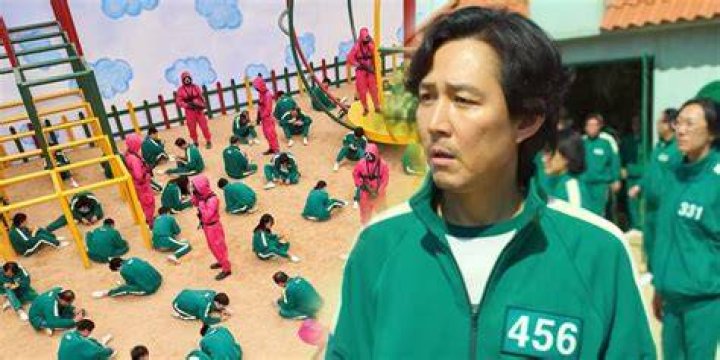
Now that Netflix has confirmed that Squid Game season 2 is on the way, the question of how a sophomore season will build on the premise and themes of the first is crucial to consider. Almost certainly, Squid Game season 2 will prominently feature another iteration of the games, but it's hard to imagine them being exactly the same as in season 1. Season 1's Squid Games were based around those of the creator's childhood and were often deceptively simple, designed specifically to illustrate the powerful themes of good vs. evil and the bonds between people.
It's most likely that Squid Game Season 2 will feature a mix of new games and reimaginings of some classic Squid Games from Season 1. It would fit the tone of the show for Squid Game season 2's games to be taken from the classic children's repertoire, so this format probably won't be tampered with. However, if season 2 is to distinguish itself from the first, the games may have to do something different this time. That could mean becoming more advanced or complex or making up new games that don't exist in the real world.
Have Any New Squid Games Been Confirmed For Season 2?
As of June 12, 2022, Squid Game season 2 is officially in the works at Netflix. Series creator Hwang Dong-hyuk has confirmed that Seong Gi-Hun will be back to participate in another round of the deadly games, and the Front Man (Hwang In-ho) will return, too. As exciting as this news is, Hwang has also tempered expectations for when Squid Game season 2's release date might be, reminding audiences that it took twelve years for him to realize the first season of Squid Game. That said, Hwang has confirmed that he's began writing the script, and that "Humanity is going to be put to a test through those games once again," (via Entertainment Weekly).
The series creator has given no further clues about what new Squid Game games will appear next season, though he has also explained that they will ask the vital question, "Is true solidarity between humans possible?" The earliest Squid Game season 2 might arrive would likely be late 2023 or 2024, but audiences can rest assured that it will retain Hwang Dong-hyuk's signature mix of spectacle and sharp socio-cultural commentary. What's more, Hwang and Netflix are even in talks to extend the series to a third season. For now, however, Squid Game season 2's story details and cast — beyond Gi-Hun's vengeful return — remain unknown.
What Games To Expect In Squid Game: The Challenge
When Netflix announced the reality show version of the series, Squid Game: The Challenge, fans of the show were skeptical that it could translate well. After all, part of the drama from Squid Game comes from what the players could lose, not just their vying for the win. The players in Squid Game: The Challenge compete in modified versions of the Squid Game games, but there are also new games for the series.
The confirmed Squid Game games appearing in the reality show include Red Light Green Light, Dalgona Sugar Honeycombs, Marbles, and Hopscotch. The versions of the games in the reality show won’t be as lethal, and there will be modifications to the different games. The official trailer for the Netflix series highlights some of the gameplay. Red Light Green Light, for example, appears to feature bursting ink packs to signify elimination instead of the players being shot. Likewise, Hopscotch features dropping tiles instead of shattering glass.
In addition to the four Squid Game games confirmed for the reality show, there are going to be other challenges inspired by children’s games. One that can be seen in the trailer is a larger version of Battleship, the game that involves two players sinking one another’s ships. In this case, it appears to involve more than two players, but it’s not clear at what point in the game sequence it takes place. It’s unlikely the reality show’s new games would feature in Squid Game season 2 though.
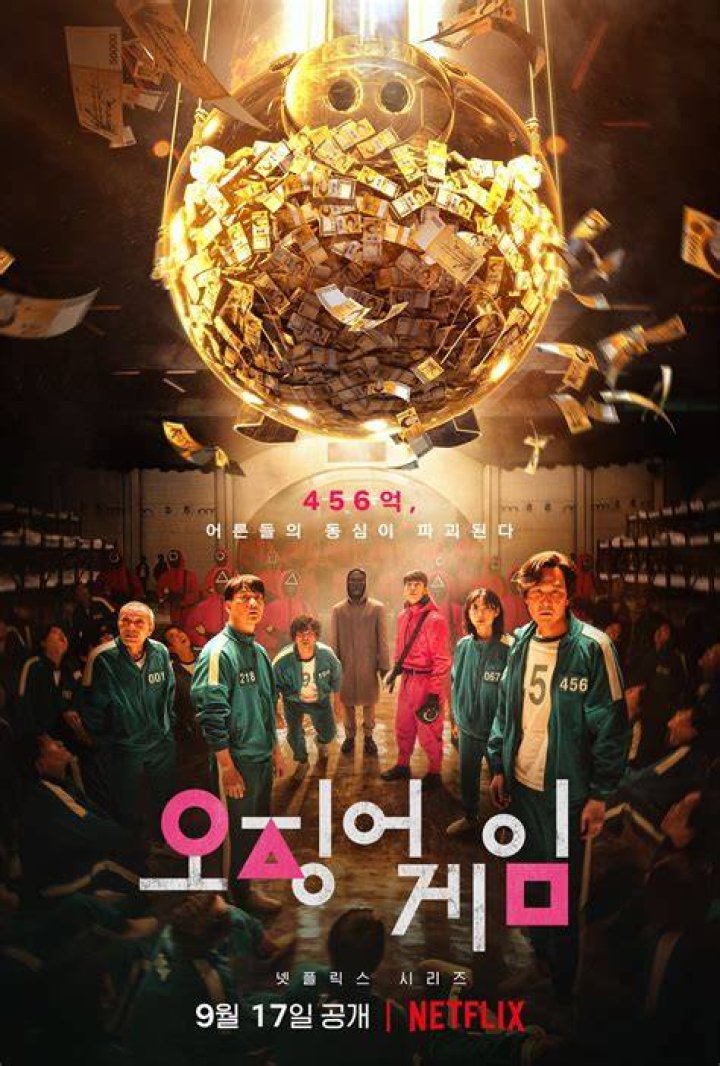
Squid Game
- Summary:
- In Squid Game, a mysterious invitation to join a competition is sent to people at risk who are in dire need of money. Four hundred fifty-six participants from all walks of life are locked into a secret location where they play games to win 45.6 billion won. Games are selected from traditional Korean children's games such as Red Light and Green Light, but the consequence of losing is death. To survive, competitors must choose their alliances carefully - but the further they go in the competition, the more likely betrayal will rear its ugly head.
- Release Date:
- 2021-09-17
- Cast:
- Wi Ha-joon, Anupam Tripathi, Oh Yeong-su, Heo Sung-tae, Park Hae-soo, Jung Ho-yeon, Lee Jung-jae, Kim Joo-ryoung
- Genres:
- Adventure, Drama, Action
- Seasons:
- 1
- Rating:
- TV-MA
- Writers:
- Hwang Dong-hyuk
- Streaming Service(s):
- Netflix
- Directors:
- Hwang Dong-hyuk
- Showrunner:
- Hwang Dong-hyuk
- Season List:
- Squid Game - Season 1, Squid Game - Season 2